




All Rigid Packaging articles
-
 Article
New technology converts banana plantation waste into pulp packaging
Papyrus Australia has developed a proprietary technology to convert banana plantation waste into pulp for use in food containers, trays, protective packaging, and more.
-
 Article
All-in-one closure integrates desiccant, tamper evidence, and child-resistance
Colorcon has revealed OneLock, its all-in-one closure system for moisture-sensitive oral dosage products – featuring a built-in desiccant and child-resistant component for protection and simplicity.
-
 Article
Portugal kicks off national Deposit Return Scheme for drinks packaging
Today, Portugal is launching its national Deposit Return System (DRS) for ready-to-drink beverage packaging – introducing over 3,000 collection points, including baling capabilities at remote kiosk locations.
-
 Podcast
Packaging and the consumer: A deep dive
Using fresh consumer data from Pro Carton’s 2026 packaging perceptions survey, Pro Carton’s Winfried Muehling, MM Group’s Birgit Hösch and RDM Group’s Krzysztof Krajewski discuss how recyclability, material choice and transparent communication influence purchasing decisions, brand loyalty and perceptions of fairness around issues such as shrinkflation with Elisabeth Skoda.
-
 Article
Sonoco’s paper-based GreenCan applied to Noitmoutier’s sea salt range
The Noirmoutier Sea Salt Cooperative has adopted Sonoco’s paper-based GreenCan for its Agri-Éthique labelled sea salt range, intending to embrace paperization and reduce its plastic consumption while protecting its product against humidity.
-
 Article
Egg-sploring the Easter packaging landscape in 2026
With Easter fast approaching, Packaging Europe takes a look at the packaging landscape this holiday season, from recycled and recyclable formats to creative campaigns; and weighs up the challenges, including high prices and increased waste.
-
 Article
Industry reacts to new Packaging and Packaging Waste Regulation guidance
The European Commission’s new guidance document sets out to clarify elements of the Packaging and Packaging Waste Regulation, but what does the industry think? We consulted organizations and representatives to understand their views on the confirmed deadlines, rule exemptions and restrictions, logistical feasibilities, and remaining questions.
-
 Article
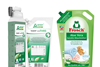
Werner & Mertz presents recycled pouches and dosing system for cleaning sector
Werner & Mertz has introduced a recyclable stand-up pouch containing post-consumer household recyclate, alongside a recycled plastic dosing system with refill pouches, for its cleaning products in a bid to reduce plastic consumption, improve recyclability, and help users cut costs.
-
 Article
‘Plastic-like’ Dry Molded Fiber caps developed by PulPac and partners
PulPac has revealed a new generation of ‘plastic-like’ Dry Molded Fiber caps, developed alongside PA Consulting and Optima to replace conventional plastic caps and unlock new branding opportunities.
-
 Article
Henkel’s new tinplate cans expected to reduce CO2 emissions by 62%
Henkel has worked with Pirlo and Thyssenkrupp Rasselstein to use tinplate cans made with CO2-reduced steel for contact adhesive products – a move set to reduce emissions by 62% compared to conventional tin cans.
-
 Article
Croxsons targets weight reduction with new glass packaging solution
Glass packaging company Croxsons has launched Rightweight, its new solution for glass bottles and jars in the food and drink sector, said to potentially reduce glass packaging weight by up to 30%.
-
 Article
Industry associations call on European Commission to ‘cut red tape’ in EU Environmental Omnibus
German industry associations including the Federation of German Industries, GemPSI and WVMetalle have signed a statement urging the European Commission to use the Omnibus proposals as a chance to simplify PPWR legislation for industrial and commercial packaging.
-
 Article
What does a new Netflix film say about the potential impacts of plastic exposure?
A new Netflix documentary, The Plastic Detox, explores a potential link between infertility and exposure to chemical additives in plastics – but is it a fair representation of the packaging industry? Packaging Europe watched the documentary to explore its claims, and consults the reactions of industry voices to understand its reception.
-
 Article
‘Impossible’ Chupa Chups packaging promotes new, ‘easier-to-open’ wrapper
To market the launch of its ‘easier-to-open’ wrapper, Chupa Chups has unveiled the ‘final boss’ of lollipop packaging – described as blade-proof, fireproof, and capable of withstanding 1000kg before it cracks.
-
 Article
The Consumer Goods Forum’s vision of EPR for liquid packaging cartons
In its latest report, The Consumer Goods Forum’s Plastic Waste Coalition of Action identifies setbacks and recommends guiding principles to help low- and middle-income countries apply extended producer responsibility to liquid packaging cartons.
-
 Article
Smurfit Westrock acquires Cartomanabí to secure corrugated growth in Ecuador
In an effort to expand its presence in Ecuador, Smurfit Westrock has completed an asset purchase of Cartomanabí – including its annual corrugated production capacity of over 50,000 tons.
-
 Article
China’s ‘action plan’ to repurpose 4.5 billion tonnes of solid waste by 2030
China has developed an ‘action plan’ to boost its solid waste treatment capacity in the next five years, aiming to utilize 4.5 billion tonnes of solid waste and recycle 510 million tonnes by 2030.
-
 Article
Metsä Board reveals folding boxboard and custom-cut sheet delivery solution
Metsä Board has unveiled its Pro FBB Go folding boxboard, designed for demanding food and pharmaceutical packaging, and its new custom-cut sheet delivery solution for the European market.
-
 Article
Royal Flora Holland ships flowers in new reusable, returnable bucket
Royal Flora Holland is launching a reusable cardboard bucket to transport its flowers in a bid to eliminate approximately 250,000 kg of cardboard annually, reduce supply chain costs, and boost efficiency.
-
 Article
Lindal Group reveals new actuators for personal, health and homecare
Lindal Group has unveiled its Snap, Luna and Matteo actuator solutions designed to expand its portfolio across healthcare, personal care and homecare applications, including nasal formulations and aluminum spray cans.