
All Social Impact articles
-
 Article
Circular&Co and The British Library team up for returnable cup scheme
Circular&Co has partnered with The British Library to implement Tap&Reuse, a zero-deposit system designed to replace single-use cups with cups that can be reused up to 1,000 times.
-
 Article
Closed-loop system for 100% recycled plastic reusable cups to be implemented at Eurovision
Borouge International (formerly Borealis), OMV, Greiner Packaging and event supplier Altstoff Recycling Austria (ARA) have teamed up to create a closed-loop system for this year’s Eurovision Song Contest in Vienna, with 100,000 reusable cups made from 100% recycled plastic due to be used on-site.
-
 Article
Little Dish pack re-designed in interactive format
Branding agency Derek and Eric has partnered with illustrator Joe Whale (also known as Doodle Boy) to re-design Little Dish’s latest pack in an interactive format, encouraging children to colour in and draw on the packaging.
-
 Article
Does generational marketing actually work?
In this edition of the Brief, we debunk the stereotypes and use real-world packaging campaigns to evaluate the dos and don’ts of marketing to this generation of shoppers, from social responsibility claims to designing for social media.
-
 Article
Up to 432,000 hydration gels could be binned during London Marathon, Business Waste says
With approximately 60,000 runners set to take part in the London Marathon this weekend, packaging waste experts at Business Waste say an estimated 432,000 hydration gels could be binned during Sunday’s event, generating around 16.2 tonnes of waste.
-
 Article
‘Credible sustainability practices are a strategic anchor in uncertain conditions’
In the face of rapidly evolving geopolitical realities and consumer expectations, maintaining credible standards has never been more important for the packaging industry. In a recent discussion, Helen Chepkemoi Too, senior director markets at FSC International, explained how these issues are affecting sustainability initiatives in the paper and pulp sector.
-
 Article
Iconic Packs – the evolution of McDonald’s packaging
In this edition of our Iconic Packs series we examine the history of McDonald’s packaging, from the launch of the Happy Meal in 1979 to its changes of material from paper to plastic and back again – and its recent incorporation of reusable packaging and recycled materials. We look at how the company’s designs have evolved over the years and what design and material changes have been made to improve sustainability.
-
 Article
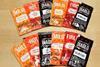
One million Taco Bell sauce packets collected through US recycling programme
TerraCycle and Taco Bell claim that over five years, one million sauce packets and single-serve containers have been collected through the Taco Bell Sauce Container US Recycling Program, to be repurposed or recycled.
-
 Article
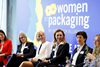
Women in Packaging programme returns at interpack 2026
interpack 2026 will host its second Women in Packaging programme, featuring a keynote speech from Tetra Pak, multi-perspective panel discussions, and networking opportunities geared towards women at all career levels.
-
 Article
How packaging design impacts neurodivergent shoppers
In this edition of the Brief, we take a closer look at what parts of packaging design can impact neurodivergent shoppers, including material feel, sounds, visual clutter and how these qualities might be adapted to make packaging more inclusive.
-
 Article
New household recycling rules come into force across England
From this Tuesday, households across England are under new rules for sorting their recycling and waste, aiming to clear up confusion and enable consistent, streamlined collections.
-
 Article
What does a new Netflix film say about the potential impacts of plastic exposure?
A new Netflix documentary, The Plastic Detox, explores a potential link between infertility and exposure to chemical additives in plastics – but is it a fair representation of the packaging industry? Packaging Europe watched the documentary to explore its claims, and consults the reactions of industry voices to understand its reception.
-
 Article
European PET market strained as supply tightens and costs surge
PET prices are on the rise while availability declines. Caroline Murray, senior editor at ICIS, speaks with suppliers and outlines the geopolitical and industrial factors shaping the current landscape.
-
 Article
Key trends shaping the Ukrainian packaging market in wartime
Since the Russian invasion of Ukraine in 2022, the country’s packaging market ‘significantly declined’ in the first year of war – but sectors such as food, paper and cardboard reportedly doubled their volumes in 2023. Valery Krivoshey PhD and Veronika Khalaydzhi PhD IAC of Upakovka outline the key trends and factors influencing the packaging market.
-
 Article
How does switching to paper-based packaging impact neurodiverse shoppers?
With many companies moving from plastic packaging to paper-based alternatives in a bid to improve recyclability, the move also brings changes in how the packaging looks, feels and sounds, which can have a stronger impact on neurodiverse shoppers. PRS IN VIVO managing director Patrick Young and strategic market researcher Haneefa Buckley share their thoughts on this topic.
-
 Article
ESG bonuses removed from paychecks of Apple executives
Apparently, Apple removed an ‘ESG modifier’ from its top executives’ pay packages last year – joining other big brands like Procter & Gamble and Starbucks in a trend thought to reflect a decreasing interest in corporate environmental performance across the United States.
-
 Article
European Industry Summit talks competitiveness, energy costs and sustainability
At the European Industry Summit in Antwerp, European Commission president Ursula von der Leyen set out her vision for a more globally competitive, affordable, self-sufficient and sustainable industry for Europe’s energy, steel and chemicals sectors.
-
 Article
Is it time for all trade shows to switch to reusable cups?
Borealis and Messe Düsseldorf piloted a reusable cup scheme at K Show 2025 with the aim of cutting waste and offering a ‘practical blueprint’ for advancing circularity at large-scale events. Philip Knapen, Borealis’ Application Development and Technical Service Manager for Consumer Products, tells us more about the company’s core learnings from the project.
-
 Article
Taking stock as Global Plastics Treaty negotiations begin at INC-5.3
Negotiations for a Global Plastics Treaty continue in Geneva, but where do we currently stand – and where do negotiators hope to go? We take a bird’s eye view of the International Negotiating Committee saga so far, and hear from a number of voices commenting live from the conference centre.
-
 Article
A status report on GLP-1 packaging: sizing, safety, security, and more
Weight-loss drugs keep gaining traction – is that a blessing or a curse for the packaging industry? We dive deeper into the implications of smaller portion sizes, pharmaceutical safety practices versus circular packaging initiatives, supply chain traceability, and more.